


Transitional Justice
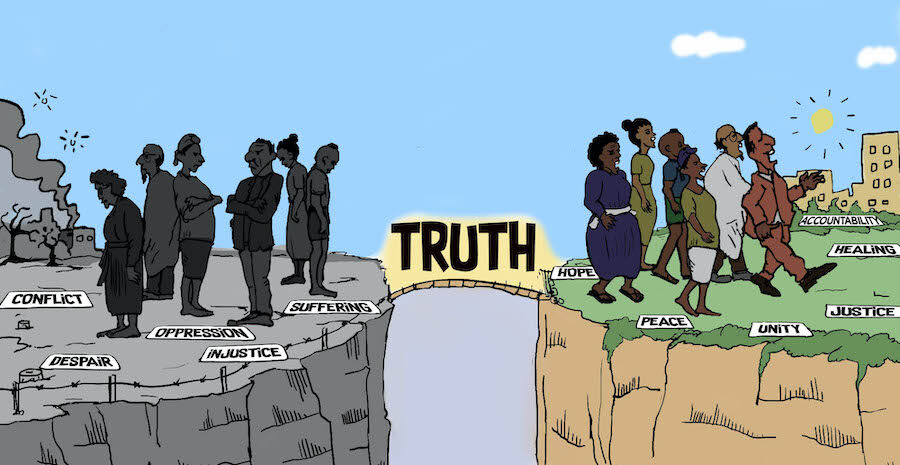
In October 2023, the Government of the Federal Democratic Republic of Ethiopia officially launched the preparation of a Transitional Justice Policy. The aim is to investigate past injustices and fundamental human rights violations that occurred at various points in Ethiopia’s history, hold perpetrators accountable under the law, facilitate conditions for victims to rebuild their lives and receive reparations, and generally, to seek truth regarding abuses committed during different historical chapters. This process is envisioned to foster truth-based reconciliation and forgiveness, thereby helping the nation break free from recurrent cycles of conflict.

In October 2023, the Government of the Federal Democratic Republic of Ethiopia officially launched the preparation of a Transitional Justice Policy. The aim is to investigate past injustices and fundamental human rights violations that occurred at various points in Ethiopia’s history, hold perpetrators accountable under the law, facilitate conditions for victims to rebuild their lives and receive reparations, and generally, to seek truth regarding abuses committed during different historical chapters. This process is envisioned to foster truth-based reconciliation and forgiveness, thereby helping the nation break free from recurrent cycles of conflict.
The Transitional Justice Policy was developed under the coordination of the Ministry of Justice, with the active involvement of independent academics from higher education institutions, legal professionals, and particularly experts with specialized higher education credentials in transitional justice. Eighty public forums were organized across the country to discuss the draft Transitional Justice Policy document. Approximately 4,800 participants, including community representatives, victims, government officials, civil society representatives, international experts on transitional justice, and members of the diplomatic community, took part in these discussions.
Following this participatory process, and enriched by input gathered from these forums, the Transitional Justice Policy was approved by the FDRE Council of Ministers on April 16, 2024 (Miyazya 8, 2016 E.C.).
The Transitional Justice Policy outlines detailed approaches concerning:
- Criminal accountability
- Truth-seeking, disclosure, and reconciliation processes
- Conditional amnesty
- Reparations systems
- Institutional reforms
In line with these directives, the drafting of legislation to implement the policy is currently underway. These include:
- A draft omnibus proclamation for the establishment of a Special Prosecutor’s Office, a Truth Commission, and a Vetting Commission.
- A draft proclamation on International Crimes.
- A draft proclamation for the establishment of a Special Court.
The drafting of these laws has been undertaken by the same independent working group of experts that prepared the policy. Upon completion of the draft legislation, it will undergo an extensive public consultation process, similar to the procedure followed for the policy’s approval, to ensure that constructive input from the consultations is incorporated.