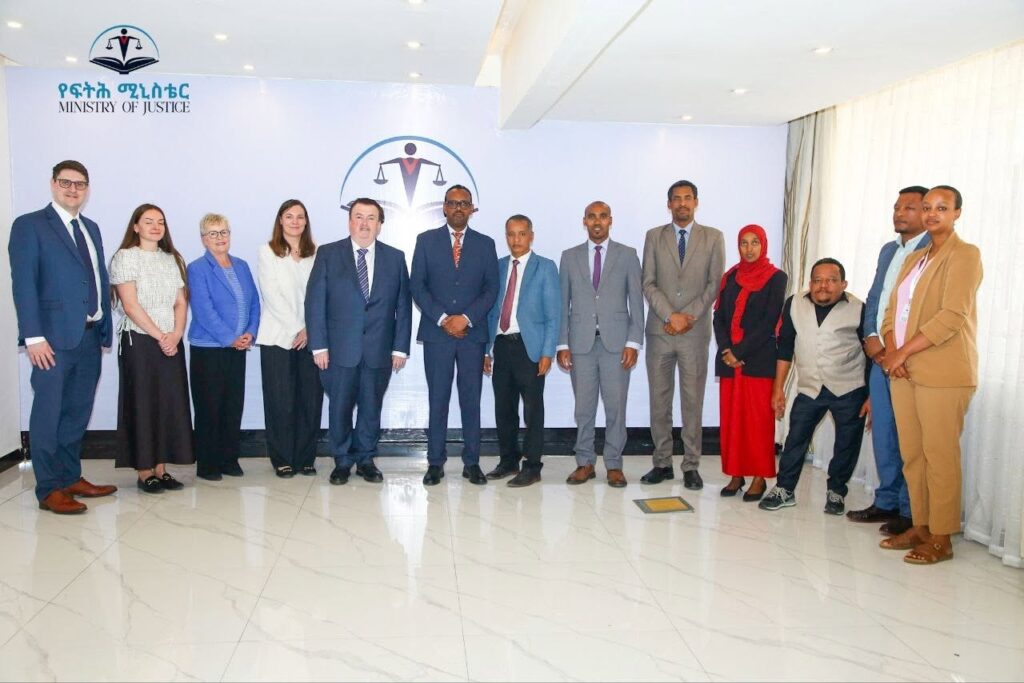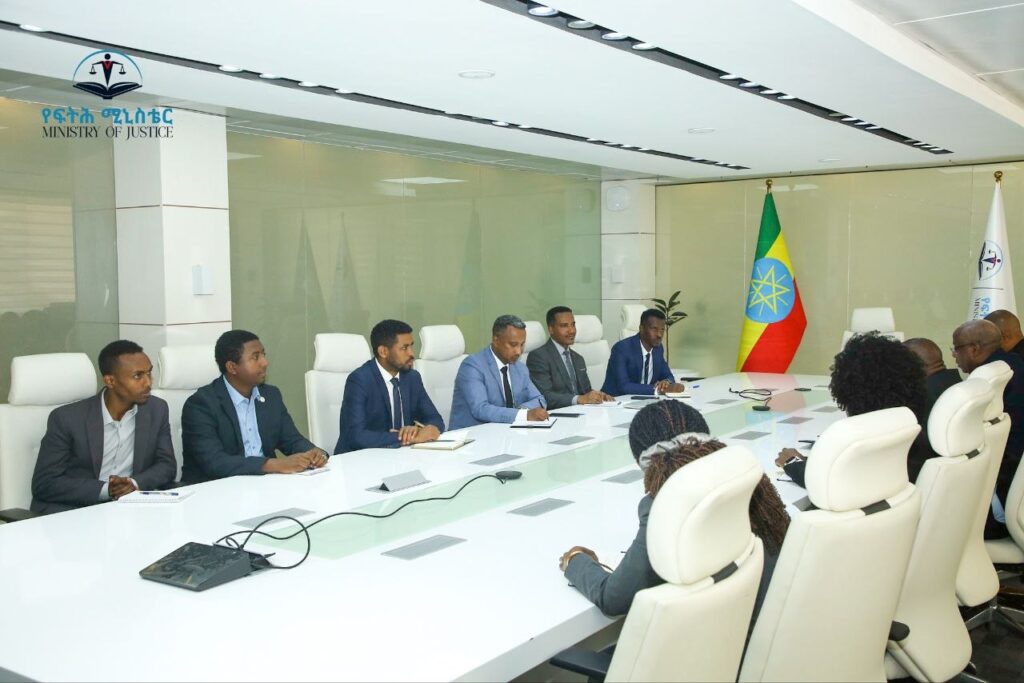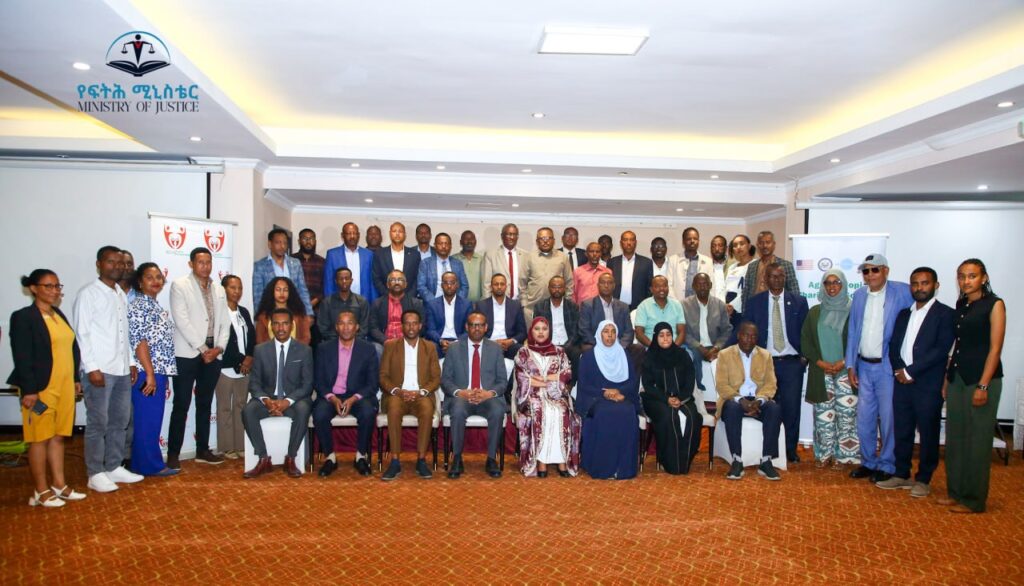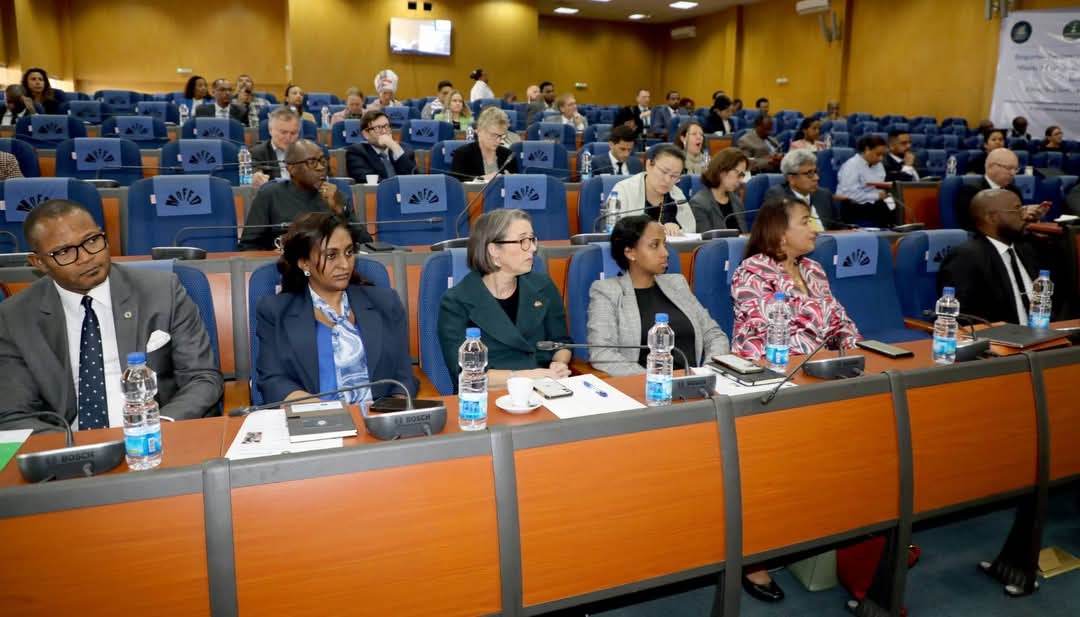



H.E. Hanna Araya Selassie, Ethiopia’s Minister of Justice, delivered a detailed presentation to ambassadors and representatives of international organizations based in Addis Ababa regarding the implementation phase of Ethiopia’s Transitional Justice Policy.
During a forum organized by the Ministry of Finance, Minister Hanna outlined the progress made in the policy preparation process since its inception. She highlighted that over 80 nationwide consultation forums were held, engaging thousands of participants, including civil society organizations and vulnerable groups, to deliberate on the policy option document.
Following the approval of the Transitional Justice by the Council of Ministers, the Ministry of Justice developed an implementation roadmap that clarifies the timelines, responsible bodies, and processes for operationalizing the policy. The Minister emphasized that transitional justice mechanisms have been designed to address accountability, the truth, facilitate conditional amnesty, promote reconciliation, and reform institutions to address severe human rights violations and their aftermath. This framework aims to restore justice and dignity to victims while ensuring lasting peace and the rule of law.
She elaborated on the preparation of legal instruments to establish independent and effective institutions that will implement the policy. These legal frameworks are expected to be ratified by Ethiopia’s House of People’s Representatives after public consultations and stakeholder engagements.
The Minister stressed that transitional justice efforts in Ethiopia will focus on uncovering the truth about past atrocities, ensuring accountability, and enabling victims to achieve redress. Moreover, she reaffirmed the government’s commitment to building independent and impartial institutions capable of effectively carrying out their responsibilities.
In response to questions from international delegates, Minister Hanna explained the steps being taken to integrate the transitional justice process with Ethiopia’s broader peace and democracy-building efforts. She urged international organizations and Ethiopia’s development partners to actively support the success of this process.
In conclusion, she called on Ethiopia’s international partners, many of whom are headquartered in Addis Ababa, to strengthen their roles in ensuring sustainable peace and democracy in Ethiopia. The Minister reiterated that their contributions are more critical now than ever to support Ethiopia’s journey toward reconciliation and stability.